

7 Must-Know Facts About Real Time Inventory Syncing for Multichannel E-Commerce
Real time inventory syncing keeps your product stock accurate everywhere you sell. Learn how top merchants automate updates, avoid overselling, and choose the best tools for live shopping.
Ever had a shopper snag the last item on TikTok, only to see it still listed as “in stock” on your Shopify store? That’s the headache real time inventory syncing solves, keeping stock levels correct across every sales channel, the moment things change.
1. Real Time Inventory Syncing: What It Actually Means
Real time inventory syncing is the automated process that keeps your product quantities updated everywhere you sell, across web stores, marketplaces, and social live streams. If a customer buys a pair of sneakers on Instagram, that unit instantly disappears from your Facebook Shop and physical POS. No more overselling or awkward apology emails. The right syncing solution does this with updates that flow in seconds, not hours, so shoppers always see what’s truly available (focus keyword).
This isn’t just for big retail chains. Even small sellers are expected to deliver up-to-the-second accuracy, whether you’re sending orders from a stockroom or running live shopping events with hundreds of viewers.

2. Why Multichannel Selling Depends on Inventory Syncing
Live shopping changed the speed of commerce. It’s not enough to update your stock “at the end of the day” or even once an hour. When a customer clicks “buy now” during a live TikTok stream, you can’t risk disappointing someone on your main web store or a marketplace listing. Overselling leads to lost trust fast, especially with impulse-driven buyers.
Real time inventory syncing prevents those double-sold SKUs and keeps returns, exchanges, and supplier stock changes in sync automatically. For merchants juggling multiple warehouses or dropshippers integrating supplier feeds, it’s the only way to manage the chaos.
3. How the Technology Works
Most real time inventory syncing relies on cloud-based platforms that connect all your sales channels using APIs. When someone buys, returns, or restocks a product, the system pings every connected store or app and updates available units instantly. Some platforms use IoT devices in warehouses for even faster, more accurate tracking. For example, solutions like Cin7 let you automate stock updates, set custom rules or buffer stock, and monitor everything from a central dashboard.1
Modern systems handle every order event, sale, return, cancelation, supplier update, without manual data entry. That’s critical, as even a single spreadsheet error can throw your numbers off across every channel.
4. Leading Tools for Real Time Inventory Syncing
There’s no shortage of tools, but not all sync equally fast or handle all channels. Here’s a direct comparison of the top platforms for multichannel sellers:
| Tool | Best For | Key Strength | Pricing Model |
|---|---|---|---|
| Stremify | Live shopping & social commerce | Real time sync + live stream sales | Credit-based (pay-as-you-go) |
| SKULabs | Warehouse-heavy operations | Barcode-driven fulfillment sync | Subscription |
| Syncio | Shopify-to-Shopify syncing | Two-way instant updates | Subscription |
| Embed360 | Etsy multi-channel sellers | AI listing optimization | Subscription |
| Cin7 Core | Growing brands | 700+ integrations | Subscription |
For live shopping, Stremify stands out since it lets you import product feeds, sync inventory, and sell directly during live streams with real time order updates, no manual intervention needed.
5. Best Practices: No More Inventory Nightmares
To get the most from real time inventory syncing, follow these habits:
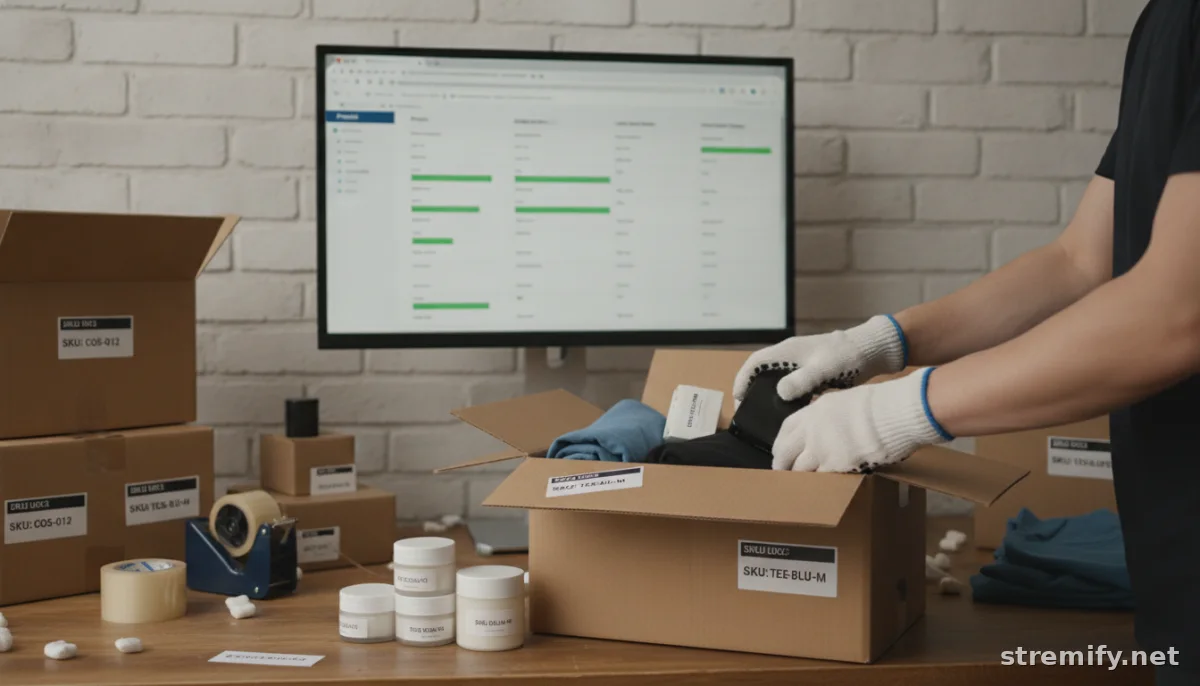
- Centralize your inventory: Manage all SKUs, variants, and bundles from one dashboard to avoid conflicting data.
- Automate everything: Configure rules for automatic updates when sales, returns, or restocks happen. No more manual spreadsheet edits.
- Set buffer stock: Leave a small safety net in high-risk SKUs to prevent overselling during high-velocity flash sales.
- Avoid duplicate SKUs: Keep clean product mappings across all channels for accurate syncing.
- Audit your data: Regularly check feeds for errors, especially after big catalog or system changes.
6. Common Pitfalls and How to Dodge Them
Real time syncing isn’t magic. Pitfalls crop up when:
- Data feeds break or go stale, always set up failure notifications.
- Different channels use inconsistent SKU codes or product names, causing mismatches.
- Buffer stock is ignored, so one viral sale wipes you out everywhere.
- Manual edits sneak in, introducing errors across all platforms.
Using a robust platform with built-in monitoring and error recovery protocols is non-negotiable. Don’t skimp on staff training, either, one accidental adjustment in the wrong place can still trigger chaos for a busy merchant.
7. The Bottom Line: Why Invest in Real Time Inventory Syncing?
Immediate stock updates across every sales channel mean fewer canceled orders, happier customers, and less time apologizing or refunding. Merchants who automate inventory syncing see improved operational efficiency and higher buyer confidence, because shoppers know they won’t hit a “sold out” surprise after checkout.
If you’re scaling live shopping or multichannel sales, real time syncing isn’t a “nice to have”, it’s a must. Your brand, your reputation, and your workflow depend on it.
Ready to sync your shop with true real time accuracy? Stremify can streamline your live shopping, social commerce, and multichannel inventory, so you can focus on what actually sells.
Frequently asked questions
What is real time inventory syncing?
Real time inventory syncing is the automated, instant update of product stock levels across all your sales channels. When an order is placed, returned, or restocked, every connected store and marketplace reflects the change within seconds, not hours.
Can real time inventory syncing prevent overselling?
Yes, real time syncing helps prevent overselling by immediately updating stock across all connected channels whenever a purchase, return, or stock change happens. This keeps product availability accurate everywhere you sell and boosts buyer confidence.
Which tools support real time inventory syncing for live shopping?
Platforms like Stremify, SKULabs, Syncio, Cin7, and Embed360 are popular options. Stremify specializes in live shopping inventory sync, while others excel at warehouse tracking, Shopify store syncing, or marketplace integrations.
How do I avoid errors in inventory syncing?
Centralize your inventory in a single dashboard, keep SKU codes clean across all channels, use automated sync rules, set buffer stock for fast-moving SKUs, and regularly audit your product feeds for errors or inconsistencies.
Is real time inventory syncing expensive?
Costs vary by platform and business size. Some offer credit-based pricing like Stremify, while others use monthly subscriptions. For most merchants, the cost is outweighed by the prevention of overselling, time saved, and improved customer trust.